
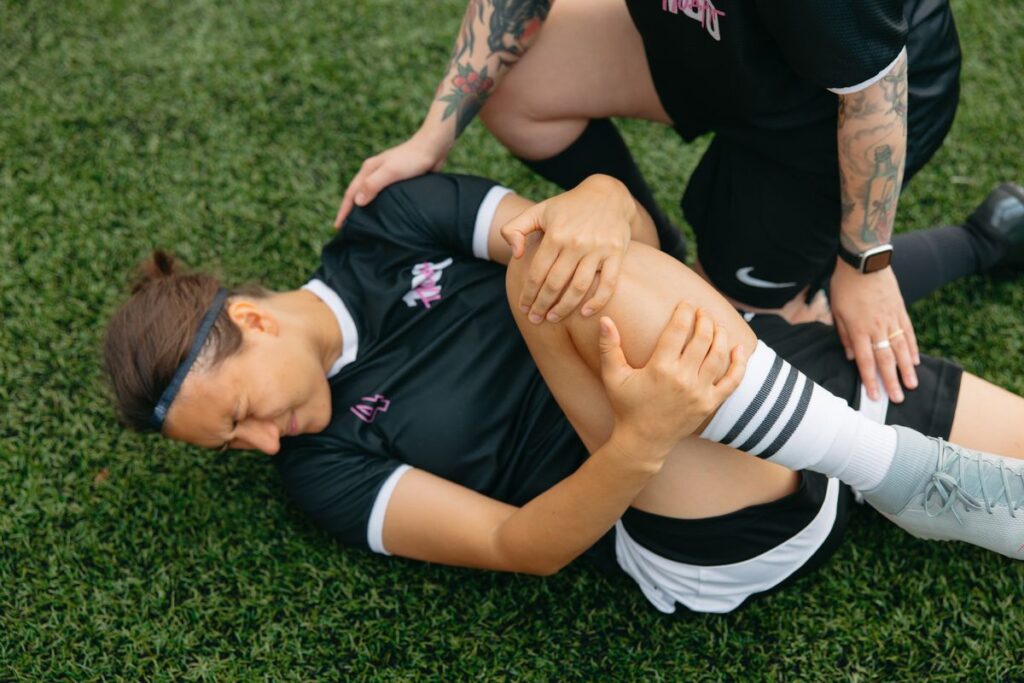
Quick answer: Sports injury physiotherapy helps you recover from sprains, strains, ligament and tendon injuries through a step-by-step plan: pain and swelling control, restoring movement, strengthening, and sport-specific training. Most minor injuries improve with early first aid and physiotherapy. Severe pain, deformity or inability to bear weight needs an orthopaedic doctor first.
From cricket in the layout grounds to running near Yelahanka Lake and badminton after work, staying active is great for health. Injuries still happen. The right first aid and a structured physiotherapy plan help you heal properly and reduce the chance of the same injury coming back. This guide explains how.
Key takeaways
- The WHO recommends at least 150 minutes of moderate activity a week for adults; staying injury-free helps you keep it up.
- For the first 2 to 3 days after a sprain or strain, the NHS advises PRICE: protection, rest, ice, compression, elevation.
- Physiotherapy moves through stages: calm the injury, restore movement, rebuild strength, return to sport.
- Returning to sport too early is a common reason injuries recur.
- See a doctor first if you cannot bear weight, the joint looks deformed, or swelling is severe.
What are the most common sports injuries?
The most common sports injuries are ankle sprains, muscle strains (such as hamstring and calf strains), knee ligament injuries, meniscus tears, tennis or golfer’s elbow, shoulder injuries and shin pain. Many are caused by sudden twisting, overuse, poor warm-up or returning to sport too quickly after a break.
- Ankle sprain: rolling the ankle while running or landing
- Hamstring strain: sudden pain at the back of the thigh while sprinting
- Knee ligament injury: a twist with a pop and swelling, covered on our knee ligament injury page
- Tennis elbow: pain on the outside of the elbow from repeated gripping
- Shoulder strain: common in cricket bowlers, swimmers and badminton players

What should I do right after a sports injury?
Right after a sprain or strain, stop playing and follow PRICE for the first 2 to 3 days, as advised by the NHS guide to sprains and strains: protect the injury, rest it, apply ice wrapped in a towel, use compression with a bandage, and elevate it. Then start gentle movement as pain allows.
| Step | What to do |
|---|---|
| Protection | Protect the area, for example with a support |
| Rest | Stop the activity and limit weight on the injury |
| Ice | Apply a cold pack wrapped in a towel for short periods |
| Compression | Use a bandage to limit swelling, not too tight |
| Elevation | Raise the injured limb on a pillow |
Do not apply ice directly to the skin. If pain is severe, see a doctor before starting any exercises.
How does sports injury physiotherapy work?
Sports injury physiotherapy works in stages. First it controls pain and swelling, then it restores movement and flexibility, then it rebuilds strength, balance and control, and finally it prepares you for the specific demands of your sport. Each stage has clear goals, and you move on when you meet them, not just by counting days.
| Stage | Goal | Typical treatment |
|---|---|---|
| 1. Protect and calm | Reduce pain and swelling | PRICE, gentle movement, pain relief physiotherapy |
| 2. Restore movement | Regain full range of motion | Stretching, joint mobilisation |
| 3. Rebuild strength | Strength, balance, control | Progressive exercises, balance training |
| 4. Return to sport | Sport-specific fitness | Running, jumping, agility and skill drills |
At our sports injury physiotherapy service, treatment may include manual therapy, exercise therapy, taping and interferential therapy for pain.
How long does sports injury recovery take?
Recovery time depends on the injury. The NHS notes that most sprains and strains improve within about 2 weeks, but more severe injuries take longer. Ligament injuries may need several weeks to months of rehabilitation, and some, such as complete ligament tears, may need surgery followed by a longer rehab programme.
If you need surgery, our pre and post-surgery physiotherapy helps you prepare and recover.

When is it safe to return to sport?
It is usually safe to return to sport when you have little or no pain, full movement, strength similar to the uninjured side, and you can complete sport-specific drills such as sprinting, jumping and changing direction without pain or swelling. Your physiotherapist will test these before giving you the all-clear.
How can I prevent sports injuries?
You can reduce the risk of sports injuries by warming up properly, building training load gradually, strengthening key muscles, wearing the right shoes, resting between hard sessions, and not returning to sport before an injury has fully healed. The WHO recommends at least 150 minutes of moderate activity a week for adults, so staying injury-free helps you stay active.
When should I see an orthopaedic doctor for a sports injury?
See an orthopaedic doctor first if you cannot put weight on the injured leg, the joint looks deformed, you heard a pop followed by rapid swelling, the knee locks or gives way, or there is numbness or severe pain. These may suggest a fracture or a serious ligament injury that needs assessment and possibly an X-ray.
Where is Naina Polyclinic in Yelahanka?
Naina Polyclinic has served families in Yelahanka, Bengaluru, since 1998 from two centres:
- Naina Polyclinic (Kogilu Road): 2, Kogilu Main Rd, Kondappa Garden Layout, Maruthi Nagar, Yelahanka, Bengaluru, Karnataka 560064. Phone: +91 88615 22910
- Naina Polyclinic & Physiotherapy Center (Yelahanka New Town): 2057, 13th B Cross Rd, MIG Sector B, Udaya Layout, Yelahanka New Town, Bengaluru, Karnataka 560064. Phone: +91 96637 44434
Dr. K.G. Shankarnarayan consults at the Kogilu Road clinic Monday to Saturday, 10:00 AM to 11:00 AM, and at the Yelahanka New Town centre Monday to Saturday, 7:00 PM to 8:30 PM. Physiotherapy sessions run Monday to Saturday, 6:30 PM to 7:30 PM at the New Town centre. Sunday is a holiday. Full details are on our contact and appointments page.
Related reading: our guides on knee pain treatment without surgery and best physiotherapist in Yelahanka. You can also learn more about our sports injury physiotherapy at Naina Polyclinic.
Frequently asked questions
When should I start physiotherapy after a sports injury?
For most minor sprains and strains, gentle movement can start after the first 2 to 3 days of PRICE, once severe pain settles. A physiotherapist can begin treatment early to guide safe movement. For serious injuries, see an orthopaedic doctor first to rule out a fracture or major ligament tear.
Should I use ice or heat for a sports injury?
Ice is generally used in the first 2 to 3 days to reduce pain and swelling, wrapped in a towel and never directly on the skin. Heat is more useful later for stiffness or muscle tightness. Avoid heat on a freshly swollen injury. Your physiotherapist will advise what suits your injury.
How many physiotherapy sessions do I need for a sports injury?
It depends on the type and severity of the injury and your sport. Minor sprains may need only a few sessions plus home exercises, while ligament injuries can need several weeks of structured rehab. Your physiotherapist will set goals and review progress at each visit.
Can a ligament tear heal without surgery?
Some ligament injuries, such as partial tears and many ankle sprains, heal well with physiotherapy. Complete tears of certain ligaments, like the ACL in active people, may need surgery. An orthopaedic doctor will examine the joint and may advise a scan before deciding.
Is it okay to play through pain?
No. Playing through sharp or increasing pain can turn a minor injury into a serious one. Mild soreness after exercise is normal, but pain that changes how you move, swelling, or giving way means you should stop and get the injury checked.
Book an appointment at Naina Polyclinic
Injured while playing? Call our Yelahanka New Town centre to see our physiotherapist or orthopaedic doctor, or book through our contact page. Kogilu Road: +91 88615 22910. Yelahanka New Town: +91 96637 44434. In an emergency, go to the nearest emergency department.
Medically reviewed by: Dr. K.G. Shankarnarayan (Shankarnarayan Kunigal), MBBS, D.Orth (Orthopaedics), Naina Polyclinic, Yelahanka. Last reviewed: November 2026.
Disclaimer: This article is for general information only and does not replace advice from a qualified doctor. Please consult a doctor about your own symptoms, tests and treatment.