
Quick answer: An ovarian cyst is a fluid-filled sac on the ovary. Most are harmless, cause no symptoms and go away on their own within a few months. Larger cysts can cause pelvic pain, bloating or pain during sex. Treatment ranges from watching with repeat ultrasound to keyhole surgery for large, painful or suspicious cysts.
Being told you have an ovarian cyst can be worrying. In most cases, though, it is a normal part of how the ovaries work, and many cysts disappear without treatment. This guide explains the symptoms of ovarian cysts, the main types, how they are checked, when surgery is needed and the warning signs of an emergency.
Key takeaways
- Ovarian cysts are very common and most do not cause symptoms.
- The NHS says most cysts form naturally and go away in a few months without treatment.
- The vast majority of ovarian cysts are non-cancerous; cancerous cysts are more common after menopause.
- Sudden, severe pelvic pain with vomiting or fainting needs emergency care.
- Surgery, usually by laparoscopy, is advised for large, persistent, painful or suspicious cysts.
What is an ovarian cyst?
An ovarian cyst is a fluid-filled sac that develops on an ovary. The NHS page on ovarian cysts explains that they are very common, do not usually cause symptoms, and most go away in a few months without treatment. Many are found by chance on an ultrasound done for another reason.

What are the symptoms of an ovarian cyst?
Most ovarian cysts cause no symptoms. When symptoms happen, they usually come from a large cyst or one that bursts or twists. They include pelvic pain, which may be dull or sharp, a feeling of fullness or bloating, pain during sex, difficulty emptying the bowels, frequent need to pass urine, and changes in periods.
- Pain in the lower tummy or pelvis, often on one side
- Bloating or a swollen tummy
- Pain during sex
- Needing to pass urine more often
- Heavy, irregular or painful periods
Some of these symptoms overlap with other conditions, such as irregular periods or fibroids, so an examination is important.
What are the types of ovarian cysts?
There are two broad types. Functional cysts form as part of the menstrual cycle and are the most common; they usually disappear on their own. Pathological cysts come from abnormal cell growth and include dermoid cysts, cystadenomas and endometriomas (linked to endometriosis). Most pathological cysts are also non-cancerous, but they may need removal.
| Type | How it forms | Usual outlook |
|---|---|---|
| Functional (follicular or corpus luteum) | Part of the normal menstrual cycle | Usually goes away in a few months |
| Dermoid cyst | Abnormal growth of cells present from birth | Non-cancerous; may need removal |
| Endometrioma | Linked to endometriosis | Can cause pain; may need treatment |
| Cystadenoma | Grows from the surface of the ovary | Can become large; often removed |
| Polycystic ovaries (PCOS) | Many small follicles, not true cysts | Managed as PCOS, not by surgery |
PCOS is different from an ovarian cyst. Our article on PCOS vs PCOD explains why.
Are ovarian cysts cancerous?
Most ovarian cysts are not cancerous. The NHS states that the vast majority are non-cancerous (benign), although a small number are cancerous, and cancerous cysts are more common after menopause. If there is any concern, your gynaecologist may arrange blood tests and further scans. A raised blood marker does not always mean cancer.
How is an ovarian cyst diagnosed?
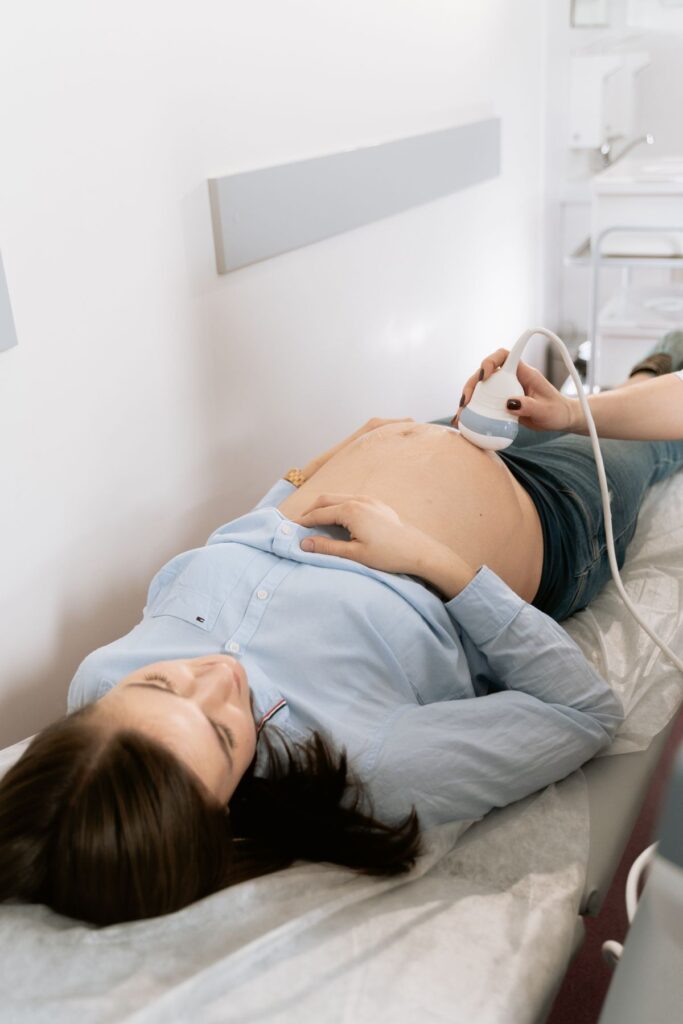
An ovarian cyst is usually diagnosed with a pelvic ultrasound, which shows its size and appearance. Your gynaecologist may also order blood tests through our lab investigations, especially if you are close to or past menopause. A diagnostic laparoscopy may be advised in some cases to look directly at the ovaries.
How are ovarian cysts treated?
Many ovarian cysts need no treatment and are simply monitored with a repeat ultrasound after a few weeks or months. Surgery is advised if a cyst is large, keeps growing, causes symptoms, does not go away, or looks suspicious. The NHS notes that regular scans and blood tests are usually recommended after menopause to monitor a cyst.
| Approach | When it is used |
|---|---|
| Watchful waiting with repeat ultrasound | Small, simple cysts, especially before menopause |
| Pain relief | Mild pain, as advised by your doctor |
| Laparoscopic ovarian cystectomy | Large, persistent or painful cysts; the ovary is preserved where possible |
| Removal of the ovary | Selected cases, such as suspicious cysts or after menopause |
An ovarian cystectomy removes the cyst while keeping the ovary, usually by keyhole (laparoscopic) surgery. At Naina Polyclinic, surgeries are carried out at affiliated hospitals where Dr. Rama Shankarnarayan is a visiting consultant.
Do ovarian cysts affect fertility?
Ovarian cysts do not usually stop you getting pregnant, although some, such as endometriomas, can make it harder. The NHS notes that if you need an operation to remove a cyst, your surgeon will aim to preserve your fertility whenever possible. Discuss your plans for pregnancy with your gynaecologist before any treatment.
When is an ovarian cyst an emergency?
Seek emergency care for sudden, severe pain in the lower tummy, especially with fever, vomiting, dizziness or fainting. This may mean a cyst has burst or the ovary has twisted (ovarian torsion), which needs urgent treatment to protect the ovary. Go to the nearest emergency department straight away.
Other gynaecology procedures, such as hysteroscopy and laparoscopic myomectomy for fibroids, are also carried out at affiliated hospitals when needed.
Where is Naina Polyclinic in Yelahanka?
Naina Polyclinic has served families in Yelahanka, Bengaluru, since 1998 from two centres:
- Naina Polyclinic (Kogilu Road): 2, Kogilu Main Rd, Kondappa Garden Layout, Maruthi Nagar, Yelahanka, Bengaluru, Karnataka 560064. Phone: +91 88615 22910
- Naina Polyclinic & Physiotherapy Center (Yelahanka New Town): 2057, 13th B Cross Rd, MIG Sector B, Udaya Layout, Yelahanka New Town, Bengaluru, Karnataka 560064. Phone: +91 96637 44434
Dr. Rama Shankarnarayan sees patients at the Kogilu Road clinic Monday to Saturday, 5:30 PM to 8:30 PM, and at the Yelahanka New Town centre on Monday, Wednesday and Friday, 11:00 AM to 1:00 PM. Sunday is a holiday. Full details are on our contact and appointments page.
Related reading: our guides on PCOS vs PCOD and irregular periods: causes and treatment. You can also learn more about our ovarian cystectomy at Naina Polyclinic.
Frequently asked questions
Can an ovarian cyst go away on its own?
Yes. Most ovarian cysts, especially functional cysts, go away on their own within a few months, according to the NHS. Your gynaecologist may suggest a repeat ultrasound to confirm this. Cysts that persist, grow, cause symptoms or look unusual may need further tests or surgery.
What size of ovarian cyst needs surgery?
There is no single cut-off. Doctors consider the cyst’s size, its appearance on ultrasound, your symptoms, your age and whether it is getting bigger. Large or persistent cysts, painful cysts and those with suspicious features are more likely to be removed. Your gynaecologist will explain the reasons in your case.
What does ovarian cyst pain feel like?
Ovarian cyst pain is often a dull ache or a feeling of heaviness on one side of the lower tummy. It may be worse during periods or sex. Sudden, sharp, severe pain with vomiting or fainting can mean the cyst has burst or twisted and needs emergency care.
Can I get pregnant with an ovarian cyst?
Usually, yes. Most ovarian cysts do not stop you getting pregnant, although some types, such as endometriomas, can make it harder. If you are planning a pregnancy and have been told you have a cyst, discuss it with your gynaecologist before any treatment decisions are made.
Is ovarian cyst surgery a big operation?
Most ovarian cyst surgery is done by laparoscopy (keyhole surgery), which uses a few small cuts. Recovery is usually quicker than open surgery. Your gynaecologist will explain the procedure, hospital stay and recovery time based on your cyst and general health.
Book an appointment at Naina Polyclinic
Told you have an ovarian cyst, or have pelvic pain? Call us to see our gynaecologist, or book through our contact page. Kogilu Road: +91 88615 22910. Yelahanka New Town: +91 96637 44434. In an emergency, go to the nearest emergency department.
Medically reviewed by: Dr. Rama Shankarnarayan, MBBS, DGO (Obstetrics and Gynaecology), Naina Polyclinic, Yelahanka. Last reviewed: November 2026.
Disclaimer: This article is for general information only and does not replace advice from a qualified doctor. Please consult a doctor about your own symptoms, tests and treatment.